Have you ever met somebody in your life who never says much and carries a mysterious aura around them, and you thought "yrr iske dimag mai chalta kya rehta hai?" (What is running through his head?)
Well, there is actually a way to find this out, and the answer is in his handwriting. This is what handwriting psychology is all about. The way a person writes shows what is going on inside his mind. The slant of his letters, the loops, the size, the spacing, everything tells a lot about his personality that he himself doesn't know. You just need to understand the pattern of his handwriting, and you can actually tell if he is thinking about his passion or if it is his job stress.
Handwriting analysis (also called graphology) is the study of these personalities on paper. So, look at your notebook and start the guide of understanding your handwriting.
Let's Know Some of The Ways We Write
| Handwriting Styles | What It Tells About Your Personality |
| Large Handwriting | Outgoing, loves attention and a big thinker |
| Small Handwriting | Focused and detail-oriented, but sometimes they are shy. |
| Right Slant Handwriting | Emotional, expressive and people-oriented. |
| Left Slant Handwriting | Reserved and independent, good at guarding feelings. |
| No slant (upright) | They are often logical, calm and controlled in nature. |
| Spaced Out Handwriting | They value freedom and personal space. |
| Cramped Spacing | They generally crave company and dislike being alone. |
| Angular Handwriting | Sharp thinkers,result-oriented but sometimes can be stubborn. |
| Loop Handwriting (round) | Creative, gentle and emotionally open. |
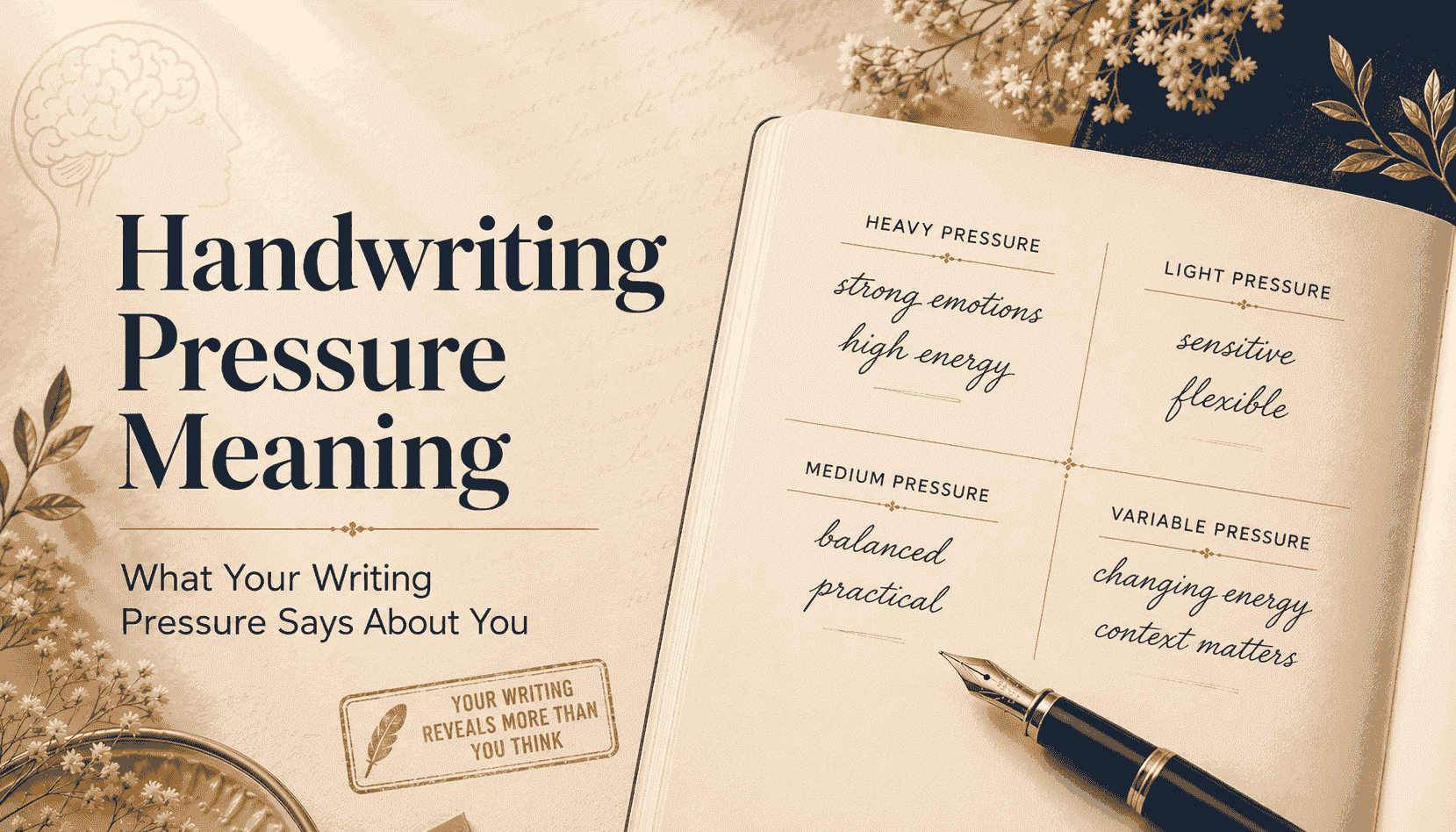
| Heavy Pen Pressure | Intense and committed, and carrying strong emotions. |
| Light Pen Pressure | Sensitive, empathetic and easygoing. |
What Is Graphology, Really?

Graphology handwriting analysis is the practice of studying handwriting to understand a person's personality, emotions, and thinking style. It means that your hand is the one that is writing, but your mind is the real player in the game, so basically how you write is a signal of what is going on in the brain.
Now, some people take it as penmanship, but penmanship is a totally different thing. It is the skill of writing neatly and beautifully. Graphology does not care if your handwriting looks beautiful, it just cares about the style of your handwriting to understand your personality.
A handwritten test in graphology usually works like this: an analyst asks you to write a few sentences naturally on unlined paper, then studies the size, slant, spacing, pressure, and letter shapes. No two people write the same combination. That is why handwriting has been used for over a century in everything from job screening in Europe to forensic document work in courtrooms.
This information comes from the experts at the All India Institute of Occult Science, where graphology is studied along with other self-knowledge sciences like palmistry and numerology. And the best part is, you do not need any tools to start with it, just a pen and a paper.
Size and Spacing of Your Handwriting
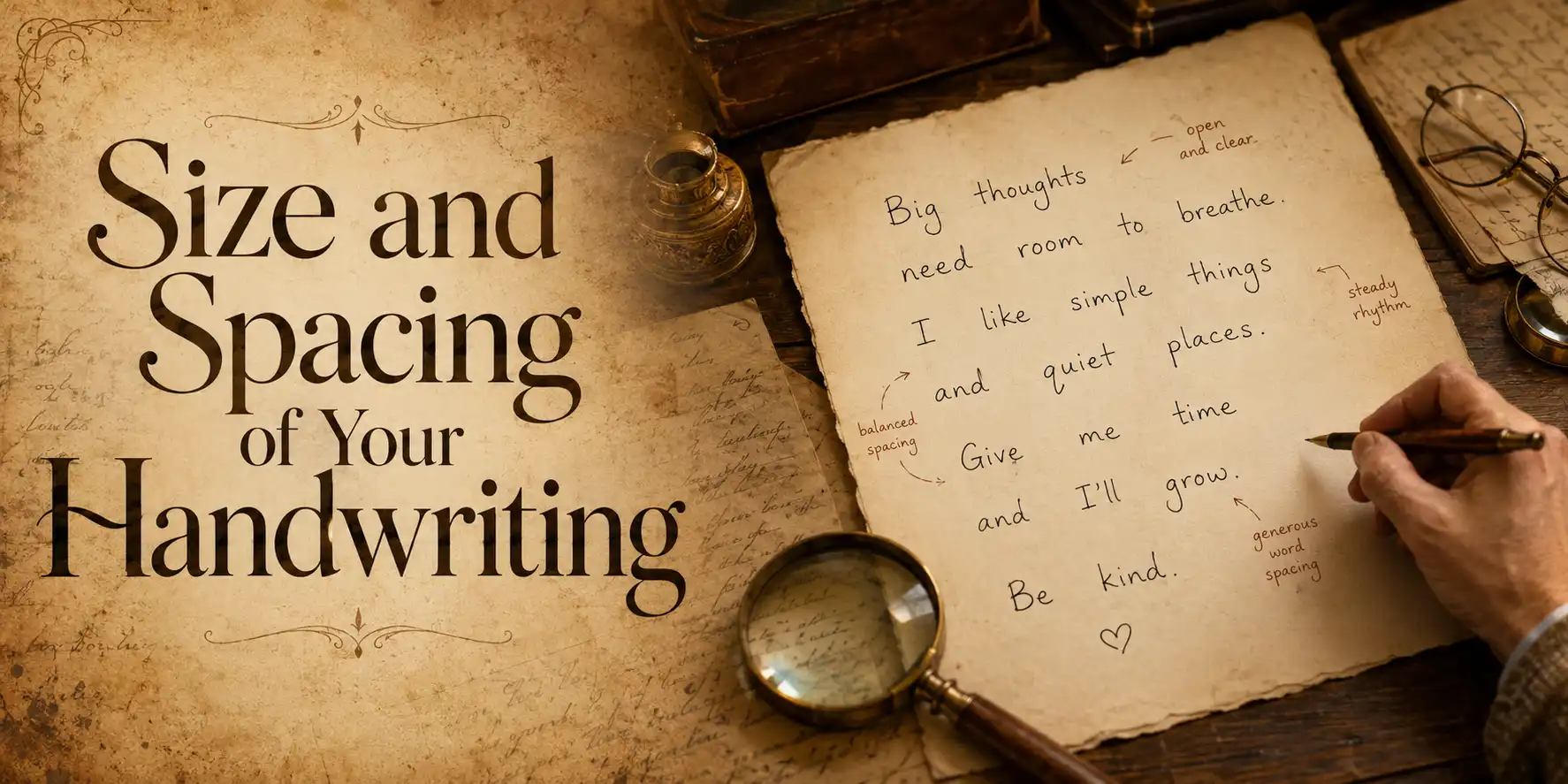
They both tell you about two opposite things in your life. The size of your handwriting shows how much attention you want, and your spacing shows how much personal space you need.
- If you have large handwriting, it means that you are one of the people who thinks big, they are often outgoing, confident and love attention. You would be the one who would want to be the centre of the stage in the group party. Many actors, salespeople, and public speakers have large handwriting.
- Example: "You may have seen singer Taylor Swift's handwritten lyric notes that she often shares with her fans, they are written in large and round handwriting."
- Example: "You may have seen singer Taylor Swift's handwritten lyric notes that she often shares with her fans, they are written in large and round handwriting."
- Small handwriting is the opposite. They are the ones who focus deeply and notice every tiny detail that others might miss, they often prefer not to come up to the stage but work from behind the scenes. This kind of writing can be of researchers, engineers and editors.
Let's Know About the Spacing
- Spaced Out Handwriting (big gaps between words) - it tells that you are someone who values independence, you would need breathing room in your relationship and hate feeling crowded.
- Cramped, Tight Spacing - it is exactly the opposite of the above, it tells about the person who loves being around people. You love the company of someone in your life, and you cannot be alone for too long.
- Wide Gaps Between Letters - it means that you are someone who has a free spirit, you are one of those people who do not want to bind themselves to one thing, they often resist the daily routine, they look for new things in your life.
The Slant: Where You Lean In Your Life?
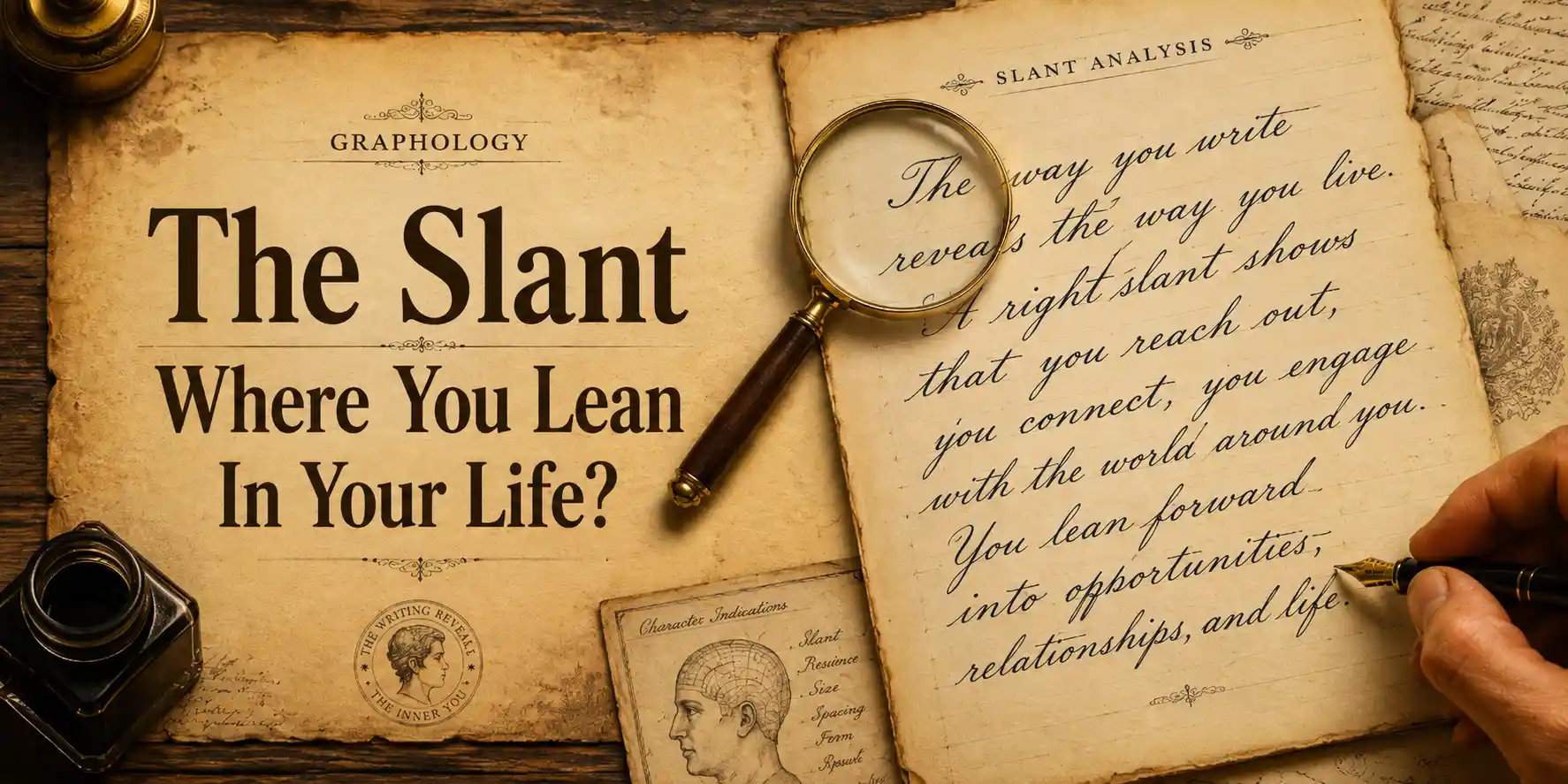
The slants run on your emotions, the right slant means you lead with emotion, a left slant means you hold emotion back, and no slant means you think with logic.
This is what each one looks like in real life
- Right Slant Handwriting - when your letters lean forward, almost like running to the next words you are going to write.
- Personality: It tells that you are someone warm, expressive and love to connect with people. You have that person in your life, or maybe you are that person who cries while watching a sad movie or hugs the person next to you while watching a haunted one.
- Personality: It tells that you are someone warm, expressive and love to connect with people. You have that person in your life, or maybe you are that person who cries while watching a sad movie or hugs the person next to you while watching a haunted one.
- Left Slanted Handwriting - when your letters lean backwards, going away from the direction of the writing.
- Personality: A backward slant in handwriting people often process their emotions before sharing with others. This kind of handwriting is often seen in left-handed people. That's why an analyst asks which hand you write with before examining anything.
- Personality: A backward slant in handwriting people often process their emotions before sharing with others. This kind of handwriting is often seen in left-handed people. That's why an analyst asks which hand you write with before examining anything.
- No Slant - if your handwriting has straight and upright letters.
- Personality: Those who have no slant are those people who always think before making a decision. They are more of a logical thinker, they can make calm decisions even under extreme pressure and rarely act impulsively.
Letters and Loops of Your Handwriting
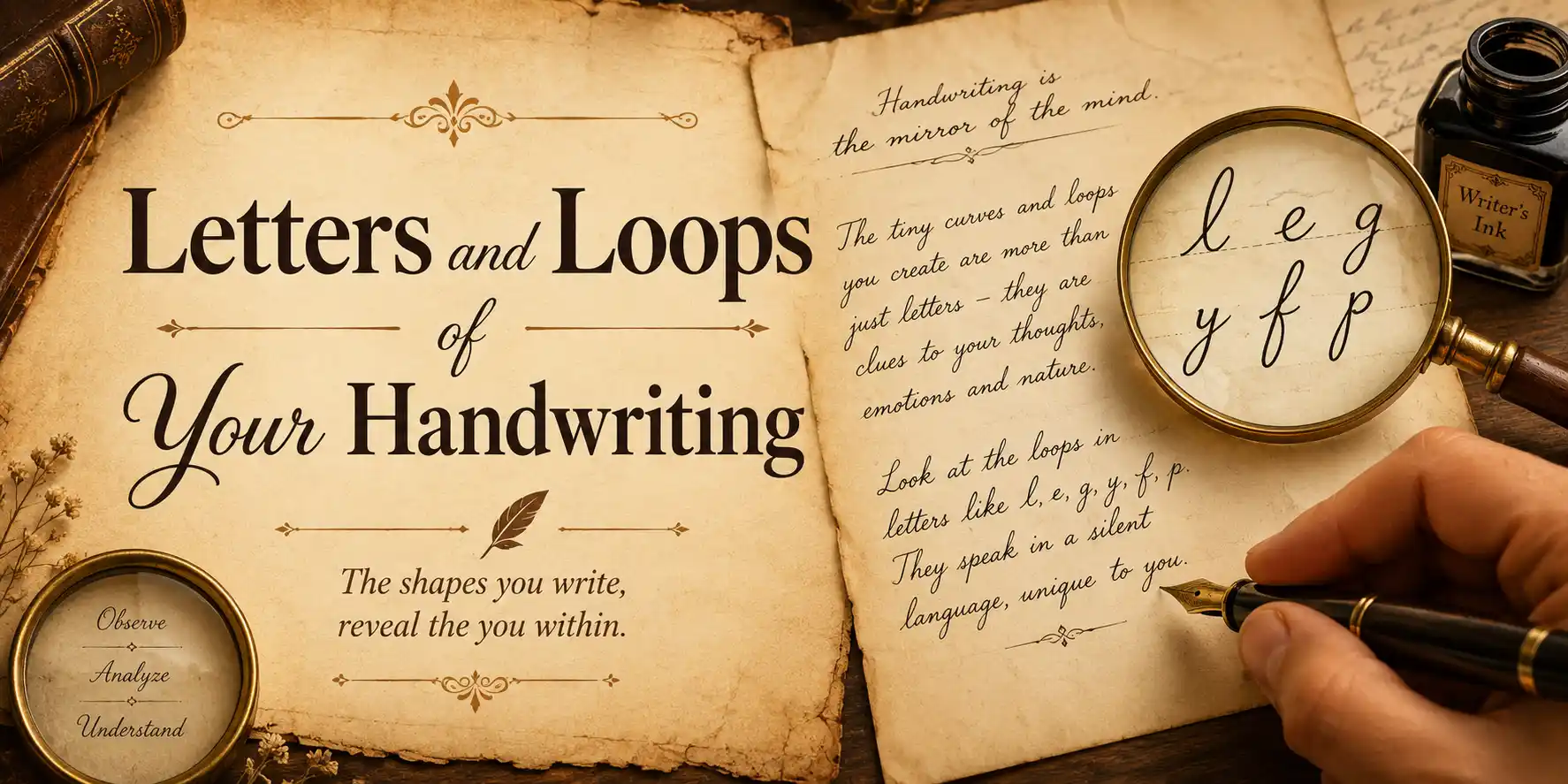
This area tells about your thinking towards the action of life, the rounded loops point to creativity and openness, while sharp angles point to drive and analytical thinking.
- Loop Handwriting - it is soft and curvy. Look at your letters l, e, and y. Big, open loops suggest imagination, emotional warmth, and a love of ideas. Fat lower loops on y and g often show a strong desire for variety and physical activity.
- Angular Handwriting - now replace curves with points and sharp turns. Angular writers are determined, competitive, and mentally sharp. They get things done, but they can also be impatient with slower people. Many leaders and lawyers have this kind of writing.
The Letter 'b': A Tiny Letter that Has a Big Story
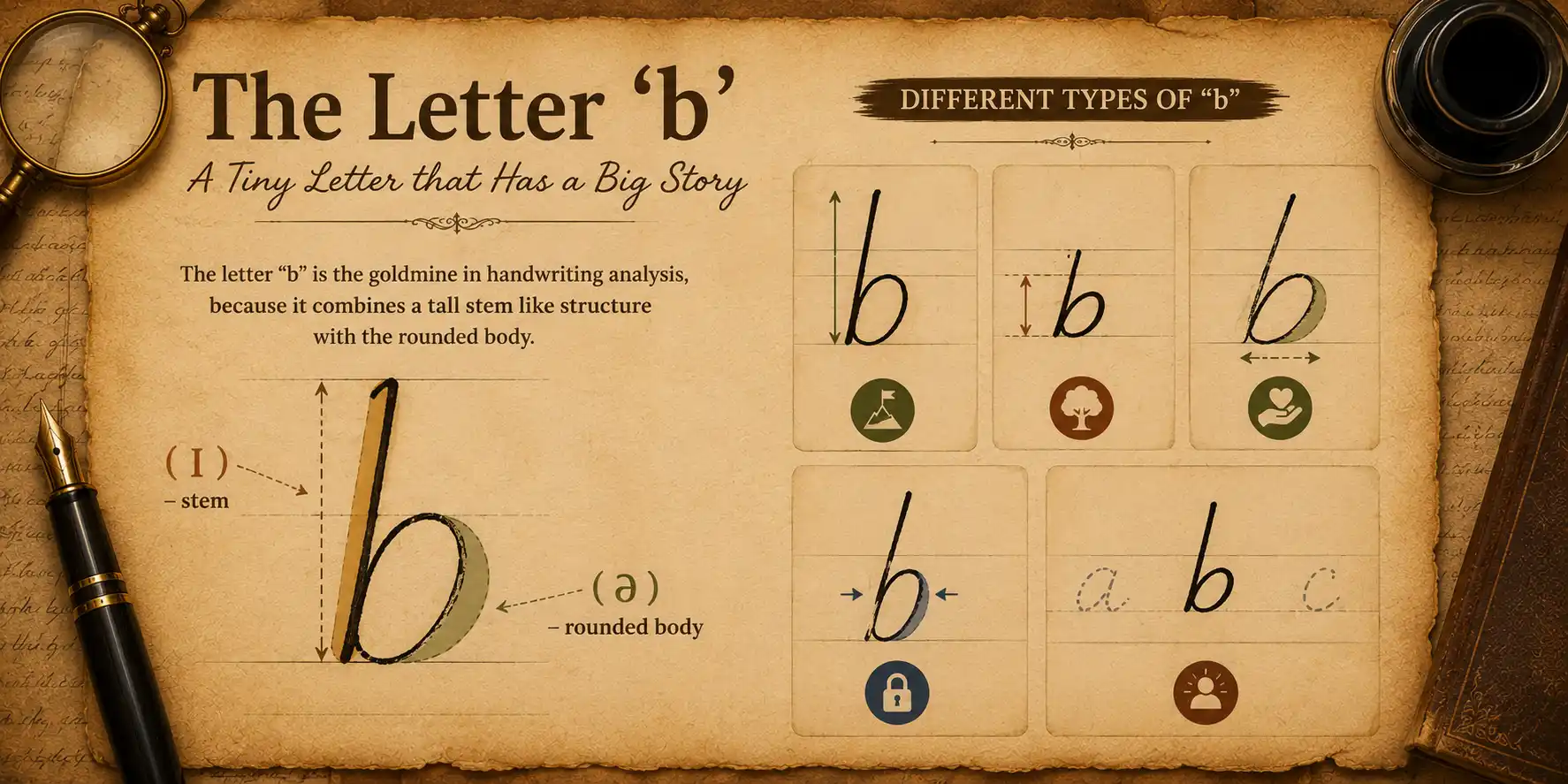
The letter "b" is the goldmine in handwriting analysis, because it combines a tall stem like structure with the rounded body,
( I ) - stem ( ე ) - rounded body
Different types of "b":
- A tall, full upper stem on your b tells about the strong ideals, ambition, and spiritual curiosity in your life. This also means that you would grow upwards in your life.
- A short or shrunken stem indicates practicality and grounded nature of the person; these people are generally focused on the present rather than worrying about the future.
- A wide, open bottom loop shows the generosity and open nature of a person.
- A narrow and pinched b points towards a person who has a cautious nature, they always keep themselves organised and are hard to read. A b that stands apart from other letters points to an independent thinker who trusts their own judgment.
Myths vs. Reality: of Your Handwriting Analysis
You have seen teachers and parents scolding their children for their messy handwriting saying that messy handwriting means that the person is not good in studies but it is not the truth.
Messy handwriting does not mean a messy mind and neat handwriting does not automatically mean a better person. These are the myths that people have believed all those years. Let's learn all the other myths and how things actually are.
Myth First
People think those who have good handwriting are smarter, but it is not true. Neat writing actually means that they prefer to be organized in their life, they are image conscious, they care about things and how they themselves appear to others. But that does not mean that they are intelligent.
Myth Second
Fast, joined-up writing is careless. Actually, running handwriting means your letters connect and flow in one continuous motion and in graphology, connected writing suggests a mind that links ideas quickly and thinks logically from point to point. Fast writers are often fast thinkers whose hands simply cannot keep up with their brains.
Myth Third
Handwriting analysis can predict your future. No. Graphology reads your present personality and emotional state, not tomorrow's lottery numbers. Your handwriting even changes with your mood. Compare something you wrote on a stressful day with a relaxed-holiday writing, and you will see the difference yourself.
How to Learn Handwriting Analysis: A Beginner's 5-Step Path
| Steps | What to Do | Why It Helps |
| 1. Collect handwriting samples | Ask five friends to write the same two sentences on plain, white paper using a ballpoint pen. | White paper or no-line paper shows natural slant, spacing, and writing style |
| 2. Study one trait at a time | In the first week, study only the writing size. In the second week, study slant style and In the third week, study spacing. | If you focus on one thing it will make things easier to learn. |
| 3. Check your observations | Compare your handwriting reading with your friend's personality. | This helps you understand whether your reading is correct or not. |
| 4. Maintain a graphology journal | Write down the details, what you observe and what is correct. | You will start noticing some common patterns within a month. |
| 5. Take proper training | Learn from a structured graphology course with guidance and feedback. | Proper training can help you develop professional graphology skills. |
Your Handwriting Is a Mirror of Yourself, Learn to Read That
Your every note, signature and scribble of your handwriting is a mirror of the person you are.
If the meaning of your handwriting made you curious to know more about the depth graphology holds, then the All India Institute of Occult Science offers structured graphology courses that take you step by step from basic to professional level, taught by experts who blend occult wisdom with practical technique.