Written by Jyoti Chauhan, Content Writer · Reviewed by Gurudev Shrie Kashyap, Chairman & Founder, All India Institute of Occult Science · Published 15 Nov 2026
Key Takeaways
- Kitchen Vastu places the kitchen in the south-east (agneya), the zone of the fire element; the north-west is the most common second choice.
- Traditionally, the cook faces east while cooking, so the stove sits on the south-east side of the kitchen.
- Fire (stove) and water (sink) should not sit right next to each other; keep at least 2-3 feet or a small divider between them.
- The sink and water storage go in the north-east of the kitchen; the fridge in the south-west, west or north-west.
- A kitchen in the wrong zone can be balanced with low-cost changes such as moving the stove, colours and lighting, without demolition.
Every Indian home has a story about the kitchen. Your grandmother may have insisted that the chulha face east, or a relative may have frowned when you put the fridge next to the gas stove. These habits come from Vastu Shastra, the traditional Indian science of architecture and space.
The good news: kitchen Vastu is mostly about simple placement. You rarely need to break walls.
This guide explains the best direction for the kitchen, where to place the stove, sink and fridge, the five-element logic behind each rule, and gentle fixes if your kitchen is in a less ideal zone. For the bigger picture, see our guide to Vastu Shastra.
Why the Kitchen Matters in Vastu
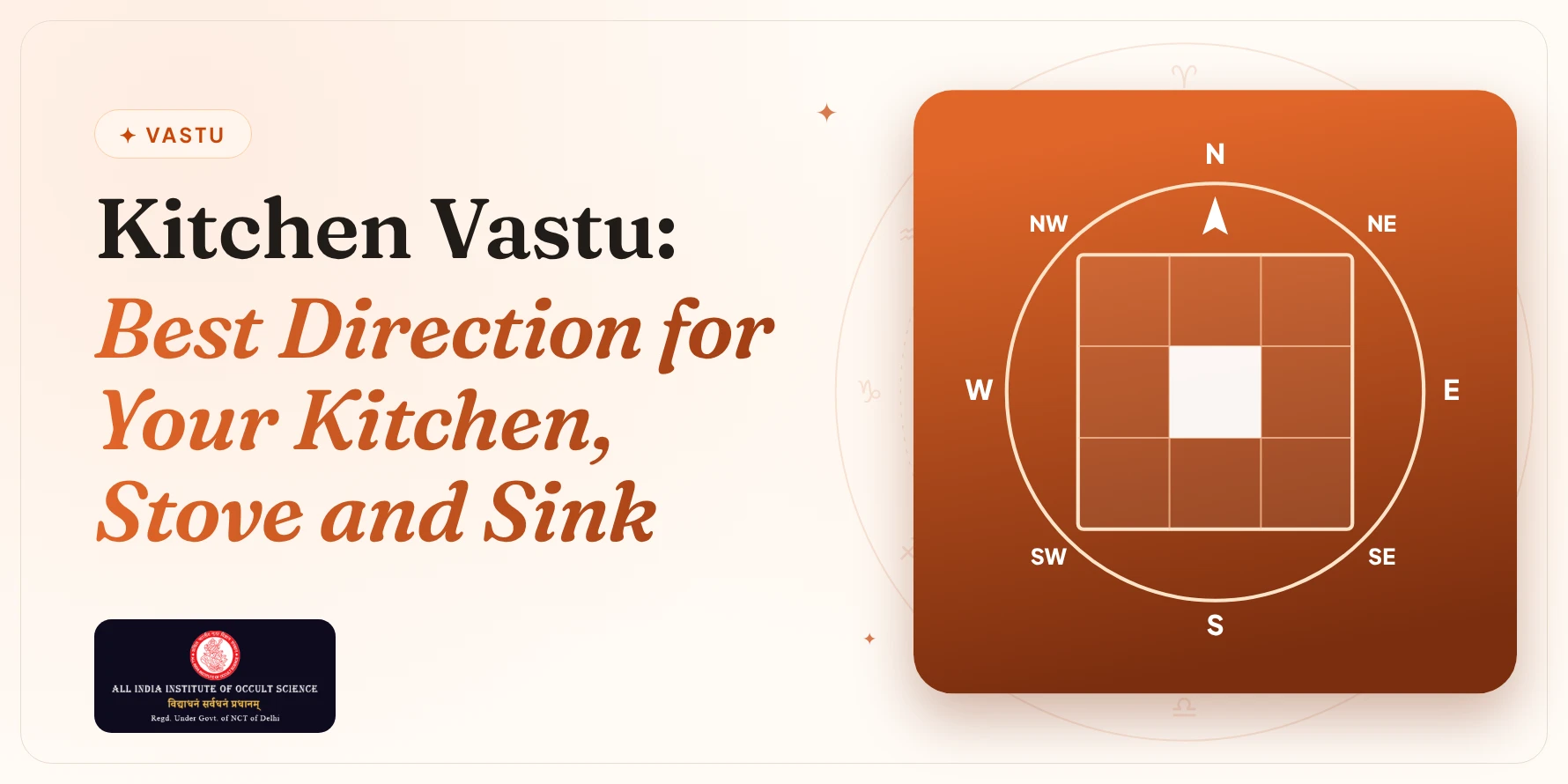
Vastu divides a home into directional zones, each linked with one of the panch tattva (five elements): earth, water, fire, air and space. Texts such as the Mayamata and the Samarangana Sutradhara associate the south-east with Agni, the fire deity, which is why it is called the agneya corner.
The kitchen is where fire is used every day. Placing it in the fire zone, and keeping fire and water apart, is the core idea behind almost every kitchen Vastu rule.
Best Direction for the Kitchen
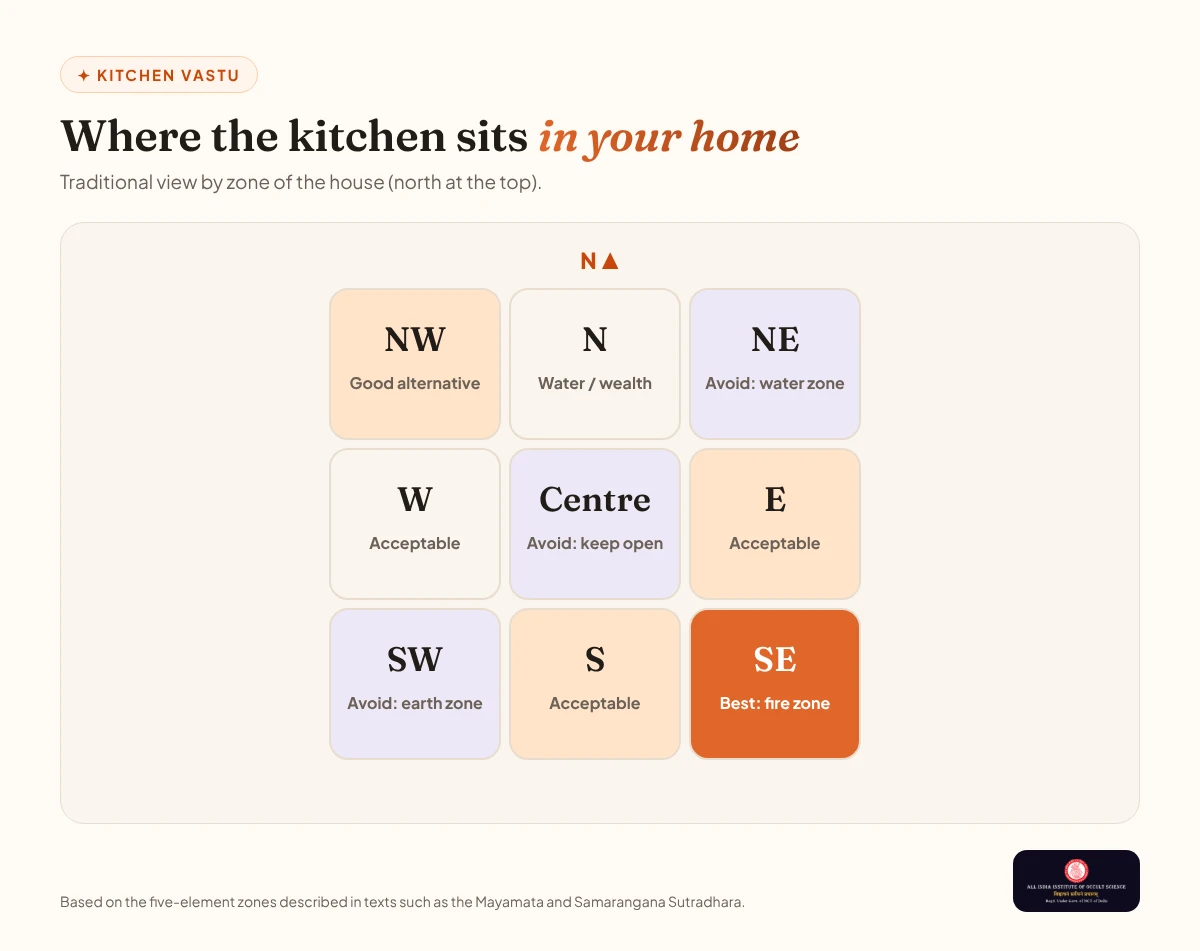
| Kitchen zone | Traditional view | Why |
|---|---|---|
| South-east (agneya) | Best | Zone of the fire element |
| North-west (vayavya) | Good alternative | Air zone; air supports fire |
| East or south | Acceptable with the stove in the south-east part | Next to the fire zone |
| North-east (ishaan) | Avoid where possible | Water and spiritual zone; fire here is seen as a clash |
| South-west (nairitya) | Avoid where possible | Earth zone, linked with stability and the head of the family |
| Centre (Brahmasthan) | Avoid | Kept open and light in Vastu |
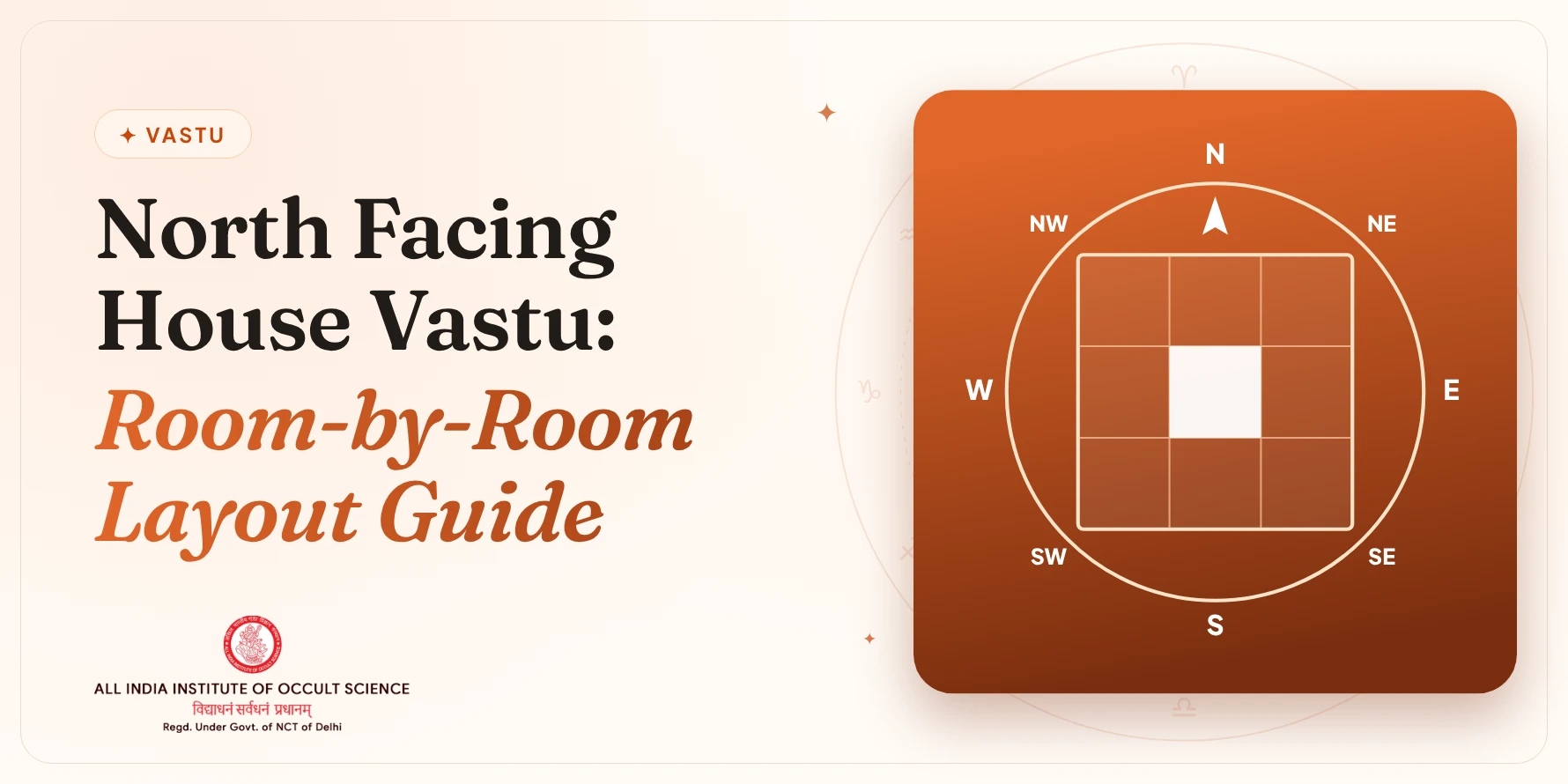
If you live in a north-facing flat, our north-facing house Vastu guide shows how the kitchen fits into the full layout.
How to Set Up a Vastu Kitchen Step by Step
Step 1: Find the directions inside your kitchen
Stand in the centre of the kitchen with a phone compass and mark north. Then divide the room into a 3×3 grid in your mind. Each kitchen has its own small south-east, north-east and other corners, even if the kitchen itself is in a different zone of the house.
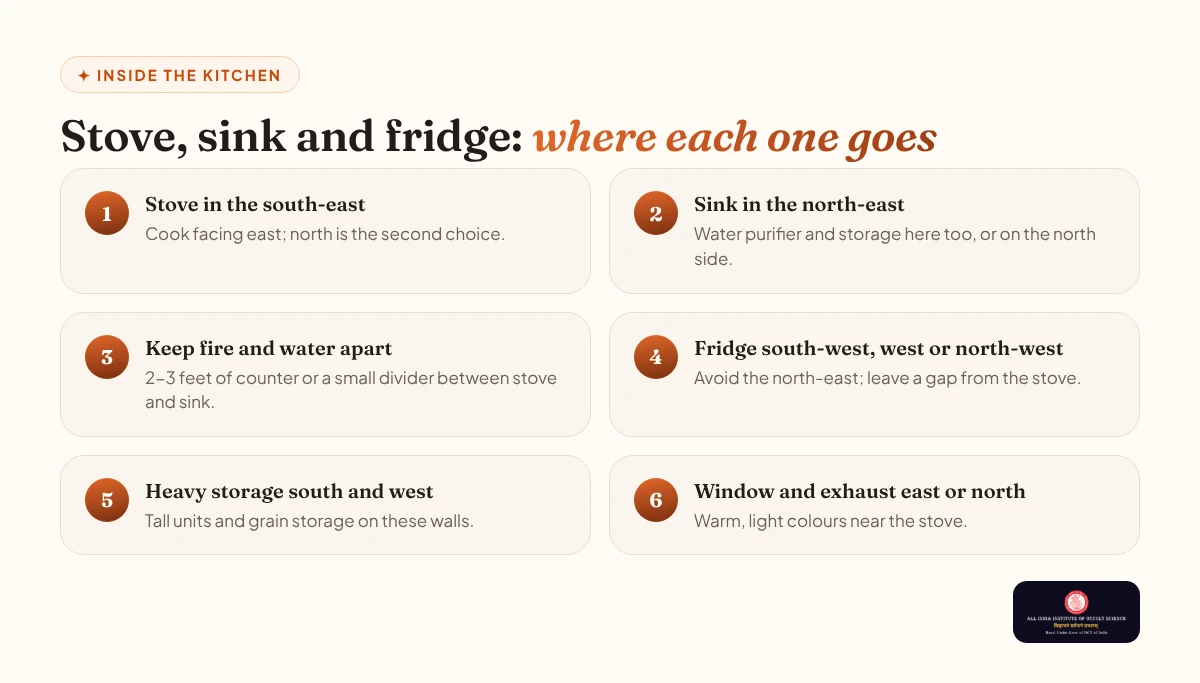
Step 2: Place the stove (gas or induction)
Put the cooking range in the south-east part of the kitchen so that the cook faces east. If east is not possible, facing north is the usual second choice. Keep the stove a few inches away from the wall rather than pressed into the corner.
Step 3: Place the sink and water
The sink, water purifier and water storage belong in the north-east part of the kitchen, the water zone. If that is not possible, the north side is the next best.
Step 4: Keep fire and water apart
The stove and sink should not sit directly next to each other or face each other. In a straight-counter kitchen, leave at least 2-3 feet of counter between them, or add a small partition.
Step 5: Place the fridge and heavy storage
The fridge is best in the south-west, west or north-west. Avoid the north-east. Heavy cabinets, grain storage and tall units go on the south and west walls.
Step 6: Windows, exhaust and colours
Windows and the exhaust fan work well on the east wall (or north). Warm colours such as light orange, peach, yellow or cream suit the fire zone; avoid very dark shades.
Kitchen Vastu at a Glance
| Item | Best place in the kitchen | Element |
|---|---|---|
| Stove / cooking range | South-east, cook facing east | Fire (agni) |
| Sink, water purifier | North-east, or north | Water (jal) |
| Fridge | South-west, west or north-west | Earth / air |
| Microwave, oven, toaster | South-east or south | Fire |
| Grain and heavy storage | South or west walls | Earth |
| Window, exhaust | East, or north | Air and light |
| Dining table (if inside) | West or north-west part | Air |
Worked Example: A 10 × 8 ft Kitchen (Sample Layout)
Imagine a sample apartment kitchen in the south-east of the flat, with the door on the west wall and an L-shaped counter along the east and south walls.
- Stove: on the east-wall counter, close to the south-east corner, so the cook faces east.
- Sink: at the north end of the same east counter, about 4 feet from the stove, which keeps fire and water apart.
- Fridge: beside the door in the south-west corner.
- Tall storage: along the south wall.
- Exhaust: on the east wall above the stove.
Nothing here needs construction. It is simply a choice of where each item goes when the kitchen is fitted.
If Your Kitchen Is in the Wrong Zone: Simple Fixes
Many flats, especially in cities, have kitchens in the north-east or south-west because of the building plan. Vastu practitioners suggest gentle balancing rather than demolition:
- Move the stove to the south-east corner of the kitchen itself, wherever the kitchen is.
- Keep the north-east part of the kitchen light: clean, uncluttered, with water items or a window there.
- Use warm, light colours on the walls near the stove; avoid dark red or black in a north-east kitchen.
- Improve light and air: good ventilation and natural light are part of every Vastu recommendation.
- Keep the kitchen clean and repaired: leaking taps, broken appliances and clutter are treated as imbalances in themselves.
You do not need to buy any special product, yantra or crystal. For a home with several conflicting zones, a consultation with a trained Vastu practitioner is more useful than a pile of remedies.
Kitchen Vastu for Open Kitchens and Small Flats
Modern apartments often have open kitchens that flow into the living room, or compact one-wall kitchens. The same principles apply, scaled down.
- Open kitchen: treat the kitchen counter as its own small zone. Keep the stove on its south-east end and the sink towards the north or north-east end. A breakfast counter or a low shelf can act as a soft boundary with the living area.
- One-wall kitchen: if the wall runs north-south, put the stove at the south end and the sink at the north end. If it runs east-west, the stove goes at the east end, with the cook facing north.
- Kitchen facing the main door: Vastu prefers that the stove is not visible straight from the entrance. A curtain, a sliding panel or simply turning the counter solves this.
- Toilet next to the kitchen: keep the shared wall free of the stove and pooja items, and keep the toilet door closed.
Small spaces reward small changes. Think of these as habits of placement rather than strict rules.
Common Kitchen Vastu Myths
"A north-east kitchen will ruin the family."
No classical text makes such a frightening claim. A north-east kitchen is considered less ideal, and the fixes above are simple.
"The fridge next to the stove is a disaster."
Vastu prefers some separation, and so does practical sense: the stove's heat makes a fridge work harder. A small gap solves both.
"You must rebuild the kitchen to correct Vastu."
Placement, colour, light and cleanliness do most of the work. Demolition is rarely recommended by responsible practitioners.
What Kitchen Vastu Can and Cannot Do
| It can | It cannot |
|---|---|
| Give a clear, traditional logic for arranging the kitchen | Cure illness or guarantee wealth |
| Encourage good light, ventilation and safety around fire | Replace electrical or gas safety checks |
| Make the space feel orderly and calm | Overrule your building's structure or safety rules |
How to Learn Vastu Properly
Placing one kitchen is easy; reading a whole house, with its entrance, slopes, cut corners and room uses, takes training. The Institute's founder, Gurudev Shrie Kashyap, holds a Post Graduate Diploma in Vastu Shastra, and the Institute's Vastu course teaches the zones, the Vastu Purusha Mandala and practical correction methods in live online classes. You can browse more home guides in our Vastu articles.
Conclusion
Kitchen Vastu comes down to three ideas: cook in the fire zone, keep fire and water apart, and keep the space clean, light and airy. Start with the stove facing east in the south-east part of your kitchen, then place the sink, fridge and storage using the table above. If you would like to understand the whole system behind these rules, explore the Institute's Vastu course.
This article shares traditional Vastu knowledge for educational purposes. It is not a substitute for professional architectural, structural, electrical or gas-safety advice. Please read our disclaimer.